THE ORIGINS OF A CITY PLANNER
- newsroom46
- Jan 13
- 4 min read
Updated: Jan 21
RAY NOTHSTEIN SERIES, EPISODE 1

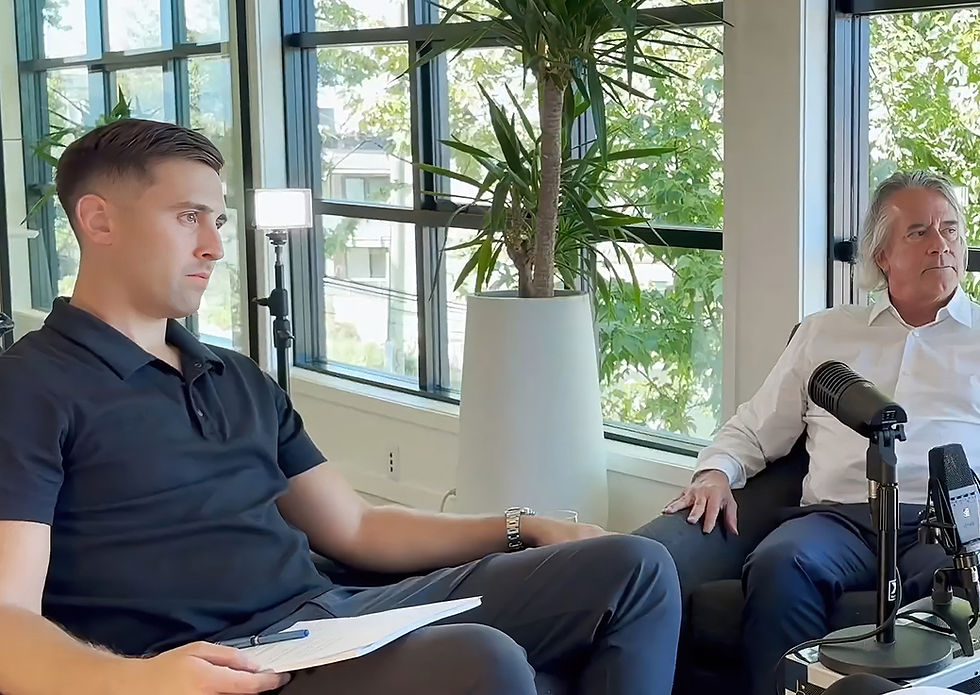
RAY: “This is like a living room with a bunch of friends. And so it’s a pleasure to be here.”
On a warm summer afternoon, we launch the first Newsroom Interview. We plan for it to become an ongoing set of discussions on the dynamic of development, mainly in Metro Vancouver, where it costs more for shelter than anywhere else in Canada. Where efforts to increase the supply of housing are impacting on the quality of life in what legendary journalist Alan Fotheringham once called “The village on the edge of the rain forest.”
As we talk, it becomes clear that the interview serves the mission of the Newsroom –Placemark’s new effort to create a journalistic entity that is evidence-based and allows us to get behind the curtain that shrouds the development industry in mystery, intended or otherwise. We’re not trying to hide our interests and objectives, but in Placemark’s world – and Ray Nothstein’s – we try to balance the need for profit with the need to serve the public good.
For Ray, this has been a consistent theme in his journey from city planner to developer, a new kind of developer, more palatable to a generation raised on Dr. Seuss’s Lorax. Throughout these episodes, we’ll look at Ray’s commitment to the public good through his work with Wesbild on Burke Mountain. The Placemark brand focuses on the “possibilities of place” delivering those through physical design to communities and clients alike. We are often asked, what, if anything, is the difference between “a place” versus “Place”? And Burke Mountain, in Coquitlam, is a great example of the latter. Now over 20 years old, it’s moved well beyond subdivision, into neighborhood, into place that now people call home. So how does that come about? We know through our work, that it’s not a formula, it’s not just a numbers game, it’s not just about policy documents. It’s much more than that.
***
Paul Fenske and Ray Nothstein have been friends and colleagues for many years. Paul remembers the day he first heard about this new kid on the block. Dave Bullus, the Wesbild Senior Vice-President, Development & Construction, dropped by the office in a better mood than usual (which was memorable because he was always in a good mood).
PAUL: “But he came up to me, and he had a smile on his face, and I said, Dave, what breeze did you ride in on today? He said, well, I wanted to let you know that I hired someone that you should have hired.”
PAUL: “And he said, yeah, his name is Raymond Nothstein, and he’ll be joining our team in order to kind of begin to help implement the (Burke Mountain) neighborhood plan.”
Tough as it is to live up to that kind of billing, Ray has that singular combination of education and work experience to take on Burke Mountain for Wesbild.
As the others listen and ask questions, Ray lays out the combination of public and private employment experience that makes it possible for him to understand the way each sector can provide insight into the other. For the first nine years of his career, he worked with three different consulting firms — an architectural firm, an architectural programming firm, and then with the distinguished former Director of Planning for Vancouver, Ray Spaxman.
So his way into the development sector and Wesbild, where he finished his career, was different than most.
RAY: “That architectural background, nine years of consulting and having to fight for every dollar and make rent every month and all those sorts of things. Plus learning how to work within a city.”
RAY: “So that’s why basically I moved every three years until I landed as a developer. And that was always to get that next bit of experience that I didn’t have yet, but I wanted.”
PAUL: “Any fear, in moving from private sector into public sector and then back again. Any hesitation?”
RAY: “They are different venues. The public sector does not go the same speed as the private sector. But even having said that, Wesbild make very quick decisions.”
RAY: “Other private sector firms have got boards, or they report back to Toronto and they can grind too. It’s just not that clean of a difference between private and public.”
RAY: “But in both cases, it was always about doing good work. And it was always about city planning in one form or another. So it didn’t matter who you were working for, your outcome, your goal was still the same.”
This imperative to do good work may strike some as a cynical attempt to overcome the demonization that afflicts developers in Vancouver and the world over, sometimes justifiably. It must be easier to work on the side of the angels, in the public sector, rather than the sell-out sector, where if trolls could spell “developer” with four letters, they wouldn’t hesitate.