THE MISSION, THE MAN, AND THE MYSTERY OF DEVELOPMENT
- newsroom46
- Jan 12
- 2 min read
Updated: Jan 21
RAY NOTHSTEIN SERIES, EPISODE 2

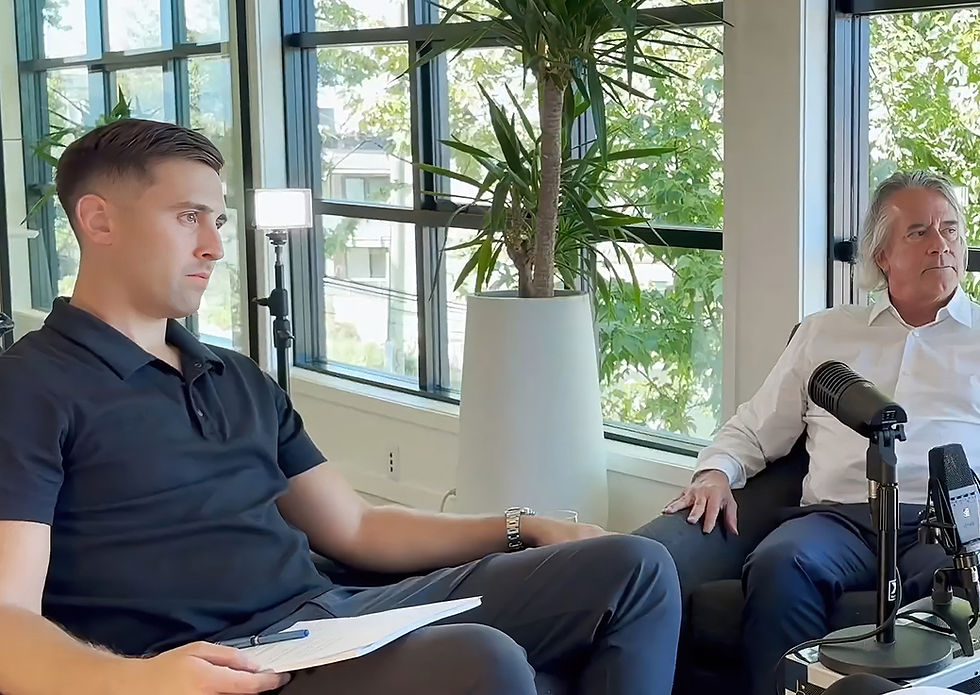
When the Placemark Newsroom team sat down with Ray Nothstein, a veteran Vancouver urban planner and former Vice President at Wesbild, it wasn’t just an interview; it was a novel exercise in pulling back the curtain on an industry that shapes the way we live, yet remains largely misunderstood.
Placemark’s Newsroom is about going deeper— exploring the big issues in development from a journalistic perspective. As Paul asks, “Could we even take a bit of a journalistic view and try to break the issues down, as we understand them obviously?”
For Theo, the appeal of this conversation was about demystifying the process. “For outsiders, there’s a lot of mystery as to how communities get built… This is a snapshot into a project, a person — Ray — and his role in Burke Mountain and development generally.”
Theo framed it as an educational moment. “We all live in designed places — streets, parks, homes — but how does it actually happen? Who makes those decisions? There are designers, engineers, developers, money, politics… I’m hoping through this interview we can untangle some of that mystery.”
From Public to Private — and Back Again
Ray’s career didn’t follow a straight line. For the first nine years, he worked with three different consulting firms — an architectural firm, an architectural programming firm, and then with the former director of planning for Vancouver, Ray Spaxman. Those experiences, he says, taught him the value of both speed and deliberation.
RAY: “That architectural background, nine years of consulting, fighting for every dollar, making rent every month — plus learning how to work within a city — shaped how I approached everything after.”
He shifted between the public and private sectors not out of fear, but to gain the next piece of experience he didn’t yet have. And while each world moves at its own pace, Ray found the same underlying goal in both.
RAY: “In both cases, it was always about doing good work. It didn’t matter who you were working for — your goal was still the same.”
For Paul, that raised the obvious question: how do you maintain your values in an industry often accused of selling them out?
RAY: “Even if you’re in the private sector, if you’re developing land or doing a transaction, your goal is to make money. But my goal — and most of the people I worked with — was also to do the right thing, to serve the public good. There wasn’t a big dichotomy in my mind between those two.”
In the Newsroom, conversations like this are design to show the industry in its complexity. Ray’s career proves that you can work within the system and still hold on to the bigger picture: building communities that work for both the balance sheet and the people who live there.